

Signatera™ is transforming the management of cancer with personalized testing
Signatera™ is an ultra-sensitive circulating tumor DNA (ctDNA) test that looks for molecular residual disease (MRD) in the blood to signal relapse earlier, often before there are clinical signs of recurrence or progression.
Signatera™ Indications
Signatera™ can be used for a variety of cancer types. To learn more about how, please select one.
Why Signatera™ for cancer management?
What is Signatera™?
Signatera™ is a special type of blood test that is designed using your own tumor tissue. It’s personalized just for you and may help:
- Identify if cancer is still remaining in your body after surgery or treatment
- Determine if you are more likely to benefit from additional therapy
- Help clarify if treatment (e.g., chemotherapy, radiation) is working
- Detect earlier if your cancer may be recurring
How to have a conversation with your doctor about Signatera™ testing
You may have questions about your care after a cancer diagnosis or treatment. You should talk to your care team about how to check if your treatment is working and how to watch for signs that the cancer might come back. Signatera™ is a test that looks for tiny fragments of tumor DNA in your blood. It’s personalized, using your own tumor tissue.
My doctor ordered Signatera™ to help monitor my treatment journey. What’s next?
After each test, your Healthcare team will talk to you about the results. It will take about 3-4 weeks to get the first result, but follow-on tests usually take only 7-10 days. Depending on your type of cancer, your doctor might use other surveillance tools to monitor your cancer. Signatera™ works best when used serially over time. Your doctor might also discuss other tests or treatments to keep a close eye on your cancer. It’s important to ask your doctor any questions you have about your test results and how they might impact your treatment plan.

Is Signatera™ testing right for you?
If you’ve been diagnosed with any type of cancer, after surgery or treatment you may have many questions like:
- “Is the cancer still there?”
- “Is the cancer coming back?”
- “Is my treatment working?”
It is important that you talk with your cancer care team about what tools are available to help answer these important questions, which may make it possible to act earlier.
How Signatera™ works: a personalized and tumor-informed approach to MRD detection
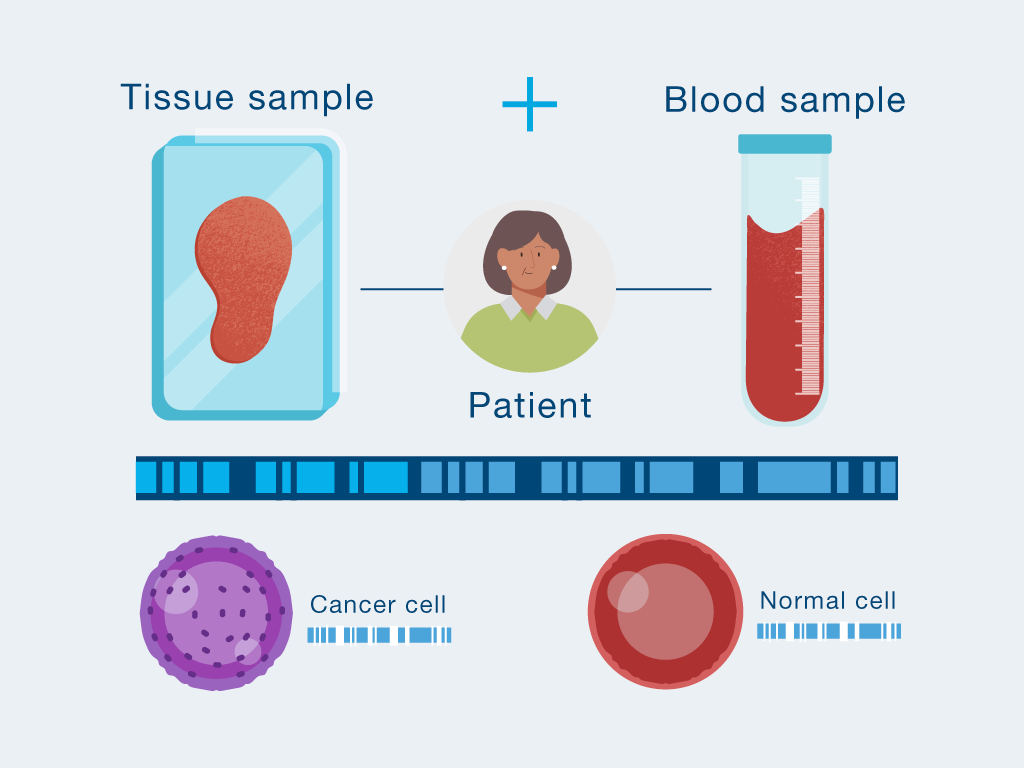
Your test is built for your cancer
Your tumor and blood are used to find the unique changes, or mutations, in your cancer. This information is used to create your personalized test.

A custom MRD test, made just for you
The MRD test is custom-built and personalized just for you, using your own tumor tissue.
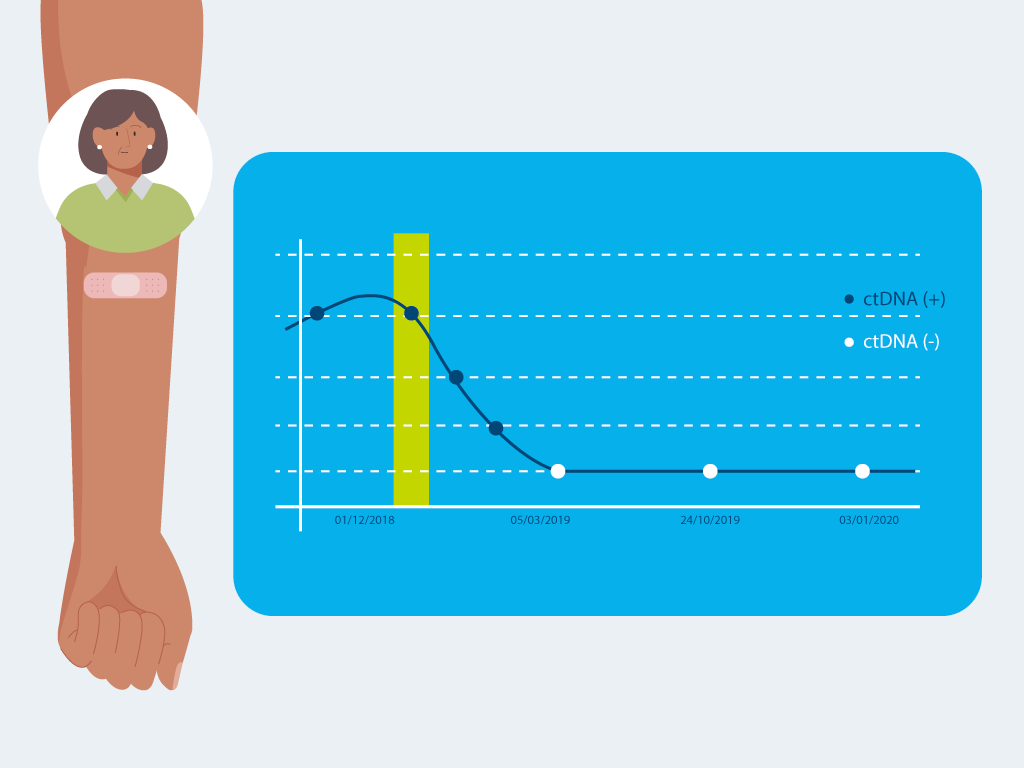
Monitoring during follow-up
Signatera™ MRD test looks for small pieces of ctDNA each time it is ordered as part of your routine follow-up blood tests.
Signatera™ is effective for many types of cancer

I have colorectal cancer
If you’ve been diagnosed with colorectal cancer:
Discover how Signatera™ MRD testing can help find any remaining cancer after treatment or surgery and/or may help detect a recurrence earlier.

I am on immunotherapy
If you are on immunotherapy:
Explore how Signatera™ MRD testing can help determine if your ICI treatment is working.

I have breast cancer
If you’ve been diagnosed with breast cancer:
Learn how Signatera™ can monitor your response to treatment or detect signs of cancer returning.
How Signatera™ helps throughout treatment
Living scan to scan can sometimes create anxiety for people with cancer. The question of relapse may be looming in the back of your mind: Did the treatment work? Is the cancer coming back?
Through shared decision making, you can work closely with your cancer care team to incorporate Signatera™ into your treatment plan to provide additional information for confident decision making. Listen to Brooks Bell, colon cancer survivor, tell her story of how she achieved peace of mind between scans using Signatera™.
“Having the information about what is happening in our bodies, in our blood, with our cancer, gives us the ability to be proactive and to take charge …and feel like we are in a position of strength. And I am thankful for that.”
Trevor
Living with colorectal cancer
How to read Signatera™ test results
Your test results will either be positive or negative for the presence of tumor DNA in your blood. Your doctor will discuss your results and answer any questions. These results provide additional insights and may help guide your treatment plan.

Negative result
A negative test result means your tumor’s DNA was not detected in your blood. Negative results may change over time. A negative SignateraTM result doesn’t guarantee that tumor DNA was not in your blood, nor that it will never be detected in the future.

Positive result
A positive test result means your tumor’s DNA was detected in your blood. These results should be reviewed with your healthcare provider to discuss options for cancer monitoring or treatment. What this means for you will depend on where you are in your cancer journey.

Test Not Performed (TNP)
TNP test result means the test was not able to be performed and there is no result. Your report will contain details about the reason the testing was not performed. Examples may include sample stability, not enough tissue or sample quality.

Results can change over time
Because these results can change over time, Signatera™ testing is designed to be repeated over the course of your cancer care as directed by your healthcare provider. The overall result as well as the trend in the amount of tumor DNA detected over time can be used by your healthcare provider to make an informed treatment plan personalized for you.
Patient access

Insurance and Medicare Coverage
Each person’s cancer is as unique as their fingerprint. Signatera™ is a custom-designed ctDNA test that is personalized to each patient’s set of tumor mutations and can identify earlier than traditional tools that may indicate cancer is still present. Knowing this information can help you have a more informed discussion with your doctor regarding your treatment journey.
Signatera™ is covered by Medicare for monitoring disease progression, disease recurrence, or relapse for patients with certain cancers.

Financial Assistance Program
If you are uninsured or worried about cost, support options may be available.
Natera offers financial assistance and flexible payment options for eligible patients.
If your estimated cost is higher, you may be contacted with options before your test is processed.
FAQs for patients
What is Signatera™ ctDNA testing?
Signatera™ is a special kind of personalized blood test designed to detect tiny fragments of cancer in the blood after a patient has completed surgery or treatment. Signatera™ uses circulating tumor DNA (ctDNA) to help detect molecular residual disease (MRD) that may be present in the blood.
Why would my doctor order Signatera™?
After surgery, tiny fragments of cancer may still be left in the body, yet too small to see on scans. Your doctor may order Signatera™ to better understand your recurrence risk by checking whether ctDNA is detected after treatment. Your doctor may use it as another tool along with imaging and other tests.
How often is Signatera™ testing ordered?
Timing depends on your care plan. Some doctors order Signatera™after surgery, during or after chemotherapy, and during surveillance. Your doctor will decide when to test based on your stage, treatment plan and follow-up schedule.
How often is Signatera™ testing done during surveillance?
Signatera™ is often used as a serial monitoring tool, meaning it is repeated over time. Your doctor will choose a testing cadence that aligns with your routine follow-up visits and imaging.
Can Signatera™ help guide decisions regarding chemotherapy after surgery?
Signatera™ results may help your doctor understand recurrence risk after surgery and discuss whether more treatment may be helpful. These decisions also depend on your cancer stage, pathology, lymph nodes, margins, other test results, and your overall health.
What does it mean if Signatera™ is positive after treatment?
A positive result means ctDNA was detected. In published data, ctDNA detection after treatment has been associated with a higher chance of recurrence. A positive result does not by itself confirm that cancer can be seen on scans, but your doctor may recommend closer monitoring.
What if my CT scan is clear, but Signatera™ is positive?
ctDNA can sometimes be detected before a recurrence is visible on imaging. Your doctor may recommend repeat testing, earlier imaging, or additional evaluation. Scans and clinical assessment remain essential, and your care team will interpret results together.
What does it mean if Signatera™ is negative?
A negative result means ctDNA was not detected in your blood at that time. That is reassuring, but it is not a guarantee the cancer will not return. Your doctor will still follow standard surveillance, including scans and other tests, because no single test provides a complete answer.
Do I still need other tests and imaging if I use Signatera™?
Signatera™ does not replace standard follow-up. Most cancer surveillance includes imaging, exams and other testing. Signatera™ is designed to provide more information, not replace these tools.
What is the difference between MRD testing and regular cancer blood tests?
Most standard blood tests measure proteins. Signatera™ measures ctDNA, which is tumor DNA in the bloodstream. It is also personalized using your tumor, which is why it is called tumor-informed MRD testing.
How accurate is Signatera™?
Signatera™ is a tumor-informed ctDNA (MRD) blood test, built from your tumor tissue to look for DNA that matches your cancer. Signatera™ has been reported as a strong predictor of recurrence risk and has been associated with detecting relapse months earlier than clinical recurrence in published findings. Your doctor will interpret results alongside scans, pathology and other follow-up.
Is Signatera™ covered by Medicare?
Signatera™ is covered by Medicare for certain cancers, including colorectal, breast, bladder, lung and ovarian cancer. It may also be used in other cancer types, though coverage can vary by insurance plan.
Natera works with many insurance providers and offers support to help patients understand coverage and potential out-of-pocket costs.
Who can use Signatera™?
Eligibility depends on your diagnosis and treatment setting, and on what your doctor is trying to learn (risk after surgery, response to treatment, or surveillance). Your doctor can tell you if Signatera™ fits your stage and care plan.