

Signatera™ for Breast Cancer
After breast cancer treatment, many people may feel a bit uncertain between doctor appointments. Follow-up appointments may include physical exams, imaging and lab tests, but it can still be hard to know what is happening in real time.
Signateraᵀᴹ is a personalized blood test that looks for tiny fragments of tumor DNA in your blood, also called circulating tumor DNA or ctDNA.
When Your Doctor May Use Signatera™
Pretreatment Baseline
Your care team may order a Signatera™ test before you have surgery or start your first treatment.
Think of this step as creating a personalized genetic fingerprint of your specific tumor. By finding this unique signature early, we can establish a “starting point” (or baseline) for your care.
Assessing Response
During neoadjuvant (before surgery) or immunotherapy (I/O) treatment, Signatera tracks the levels of tumor DNA in your blood. This helps your doctor measure how well the therapy is working and confirm if the cancer is being successfully cleared.
After Surgery Check
Even after a tumor is successfully removed, microscopic cells that can’t be seen on regular scans can sometimes stay behind.
Testing after surgery looks for this microscopic “leftover” tumor DNA. Knowing if any is present helps your oncologist understand the risk of the cancer returning and decide if you would benefit from additional preventative treatments to keep it away.
Long-Term Surveillance
Cancer recurrence can happen years later. Regular monitoring testing allows your care team to detect signs of return much earlier than standard scans, giving you peace of mind and more time for intervention if needed.
Providing Answers Throughout the Patient Journey
Danielle’s Story
When Danielle’s breast cancer molecular recurrence was detected by Signatera™ testing, she and her doctor had incentive to create a plan of action. “Information and knowledge is power – that’s how you beat cancer.” Danielle’s story underscores the importance of self-advocacy and how the right tools can make all the difference.
Personalized First, Then Tracked with Serial Blood Draws
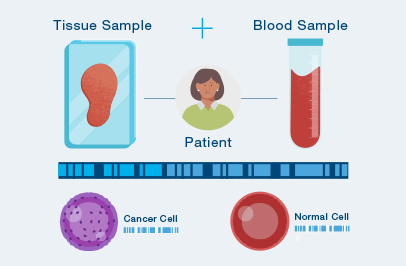
A personalized test built from your own tumor tissue
A tumor tissue sample is used to create your personalized Signatera™ test. It is custom-designed to look for DNA changes, specific to your cancer.

Test with a blood draw
Your blood sample is checked for ctDNA that matches your tumor’s DNA fingerprint.
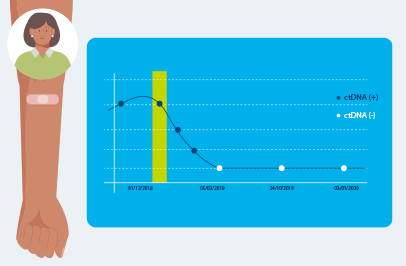
Monitor over time
Signatera™ is designed to be used serially so your doctor may order repeat Signatera™ testing during or after treatment to check whether ctDNA is detected and how results change over time.
Meet Anj: Breast Cancer Survivor and Signatera™ Patient
Anj shares her experience as a breast cancer survivor and how she thinks about monitoring, follow-up and staying informed over time.
Other Testing That May Support Breast Cancer Care Decisions

Empower™ hereditary cancer testing
Empower™ is a hereditary cancer test that can help identify inherited cancer risk and may be used to inform care decisions for some patients and families.

Altera™ comprehensive genomic profiling (CGP)
Altera™ is a tumor profiling test that looks for genomic changes and biomarkers in the tumor that may help guide treatment planning or clinical trial conversations.
Access Personalized Testing
Medicare Coverage
- Signatera™ is covered by Medicare for patients with stage II-IV breast cancer in the neoadjuvant setting, regardless of subtype and stage IIb and higher breast cancer in the adjuvant and recurrence monitoring settings.
- We welcome all insurance plans. Please refer to our list of in-network plans that we participate with, or call your insurance provider.
- We offer financial assistance programs for those who qualify.
More Information
- Find answers to your questions about eligibility, results, ordering, and more
- Don’t see your question? Contact Us.
- Learn more about Signatera™ testing in our Patient Resource Library
Understanding ctDNA Testing for Breast Cancer Monitoring
What is Signatera™?
Signatera™ is a personalized blood test designed specifically for your tumor. It looks for tiny fragments of cancer DNA, called circulating tumor DNA (ctDNA), in your bloodstream. This test is used alongside your regular doctor visits and scans to help monitor your health over time. It does not replace imaging like mammograms or CT scans, but it provides an extra layer of information.
What does the research show?
Key clinical studies have shown that testing for ctDNA can provide important insights into your recovery and long-term health:¹
- Early detection of recurrence: In long-term studies, ctDNA was often detected in the blood months before a relapse could be seen on a standard scan. This can give you and your doctor a “lead time” to discuss next steps.¹
- Predicting outcomes: Research shows that patients who test “negative” for ctDNA generally have a lower risk of the cancer returning compared to those who test “positive.”¹
- Works for all subtypes: The test has been proven effective across all types of breast cancer. Whether your cancer is Hormone Receptor-positive (ER+), HER2+, or Triple Negative, the test remains a powerful tool for monitoring.¹
- Guiding treatment decisions: Studies (like the DARE study) are looking at how these test results can help doctors decide when to adjust treatments, such as endocrine therapy and CDK4/6 inhibitors to better fit a patient’s specific needs.²
What this means for you:
By monitoring your ctDNA, you and your care team can get a clearer picture of whether your treatment is working or if your risk of recurrence has changed. It is a proactive way to stay one step ahead in your journey.
View Signatera™ Publications Breast Cancer and Signatera™ Common Questions
Common Questions About Breast Cancer ctDNA Monitoring and Signatera™
What is a ctDNA test for breast cancer?
ctDNA stands for circulating tumor DNA. These are small pieces of DNA that are released from cancer cells. Signatera™ is a personalized blood test designed to look for ctDNA found in your tumor.
What is MRD in breast cancer?
MRD stands for molecular residual disease. It means there may be a very small amount of cancer left after treatment that may not be visible on scans. Signatera™ is designed to look for MRD by analyzing ctDNA in your blood.
Does Signatera™ replace scans, exams or follow-up visits?
No. Signatera™ does not replace imaging, exams or routine follow-up care. It is designed to add information that your doctor reviews with the rest of your clinical picture.
What does a positive Signatera™ result mean?
A positive result means ctDNA was detected in the blood sample collected. In published breast cancer research, ctDNA positivity has been associated with higher recurrence risk and worse outcomes in some study settings. Your doctor will interpret what the result means for you based on imaging, symptoms and your treatment history.
What does a negative Signatera™ result mean?
A negative result means ctDNA was not detected in that blood sample at that timepoint. Many patients find that reassuring, but no test can guarantee the cancer will not return. Your doctor will still recommend ongoing follow-up.
How often is Signatera™ testing done in breast cancer?
Testing schedules vary. Some doctors use repeat testing over time as part of monitoring. Timing depends on your diagnosis, stage and treatment plan.
Can Signatera™ be used in ER+ / HR+ breast cancer during endocrine therapy?
Research such as DARE is evaluating Signatera™-guided care during adjuvant endocrine therapy for high-risk ER+ / HER2- breast cancer. Your doctor can explain whether ctDNA monitoring is relevant to your care plan.
Can Signatera™ be used in TNBC or HER2+ breast cancer?
Breast cancer monitoring needs vary by subtype. Natera has highlighted published breast cancer research that includes multiple subtype groups in long-term monitoring analyses. Your doctor can explain how ctDNA monitoring may apply to your subtype and treatment setting.
Can Signatera™ be used in metastatic breast cancer?
In metastatic breast cancer, doctors may use multiple tools to monitor how treatment is working over time. ctDNA monitoring has been evaluated in research settings and may be part of care discussions depending on your situation.
Can Signatera™ be used for immunotherapy response monitoring in breast cancer?
For patients receiving immunotherapy, Signatera™ may be used for treatment response monitoring in eligible settings. Your doctor will decide whether this fits your treatment plan and how results should be used with scans and other monitoring.
Is Signatera™ for people who have never been diagnosed with breast cancer?
No. Signatera™ is designed for people who have already been diagnosed with cancer. It is used to support monitoring and treatment response assessment, not screening.
Can Signatera™ be used during neoadjuvant treatment (treatment before surgery)?
Some people receive treatment before surgery, which is called neoadjuvant treatment. In some breast cancer settings, your doctor may use ctDNA testing as one part of monitoring over time. Whether Signatera™ is appropriate during neoadjuvant care depends on your diagnosis, treatment plan and how your care team is using the test.
Can Signatera™ be used after neoadjuvant treatment and surgery?
Yes. After neoadjuvant treatment and surgery, your doctor may use Signatera™ as part of follow-up monitoring to look for ctDNA over time. Your care team will decide if this is appropriate based on your pathology results, stage and overall treatment plan.
Can Signatera™ be used for inflammatory breast cancer (IBC)?
Inflammatory breast cancer is a less common type of breast cancer and follow-up plans can be different from other breast cancers. Your doctor may decide whether tumor-informed ctDNA monitoring fits your care plan. Signatera™ is designed to be personalized to your tumor, which can support monitoring discussions across different breast cancer types.
Is Signatera™ right for you?
References
1Shaw JA, et al. Serial Postoperative Circulating Tumor DNA Assessment Has Strong Prognostic Value During Long-Term Follow-Up in Patients With Breast Cancer. JCO Precis Oncol. 2024. (Source for Lead Time and Accuracy)
2DARE Trial (NCT04567420): A Phase II Study of ctDNA-Guided Second-Line Adjuvant Therapy. (Source for Treatment Strategy)